

MALAYBALAY CITY, Bukidnon (March 18, 2026) – For generations, Indigenous communities throughout the Philippines have cared for forests, rivers, and ancestral lands. Their traditions guide how families farm, settle disputes, and care for nature. Today, experts argue that these practices offer valuable lessons that can help shape more inclusive and sustainable development across the country
To help translate these lessons into policy, the Philippine Institute for Development Studies (PIDS) highlighted Indigenous knowledge during its 12th Knowledge Sharing Forum early this March in Malaybalay City, using the Socioeconomic Research Portal for the Philippines (SERP-P) as a platform to connect research with policymaking.
The forum gathered researchers, educators, and development advocates to discuss how Indigenous knowledge can inform national and local policies. Participants emphasized the need for policymakers to listen more closely to Indigenous voices and draw from long-standing practices that promote harmony between people and the environment.
Data from the Philippine Statistics Authority show that nearly nine million Filipinos identified as Indigenous in 2020. Many serve as farmers, fisherfolk, artisans, and community leaders who protect ancestral domains while sustaining traditional resource management practices.
For PIDS President Philip Arnold P. Tuaño, these experiences offer valuable lessons for national development.
“Research helps document Indigenous knowledge and community realities, ensuring their perspectives shape policies and programs,” Tuaño said.
He explained that Indigenous systems—rooted in environmental stewardship, peaceful conflict resolution, and shared community leadership—offer practical approaches to today’s development challenges.
Tuaño also urged policymakers and researchers to broaden discussions beyond Metro Manila and engage communities in the regions.
“Strengthening regional research collaboration expands the country’s research ecosystem and promotes evidence-based policymaking,” he said.
To support this effort, PIDS organized the forum through the Socioeconomic Research Portal for the Philippines (SERP-P), in partnership with Bukidnon State University and the Polytechnic University of the Philippines.
Launched in 2000, SERP-P serves as the country’s first open-access repository of policy studies. It now links more than 70 partner institutions composed of researchers, scholars, and development advocates.
By making policy research accessible to policymakers and the public, SERP-P helps promote informed decision-making and supports development strategies grounded in community realities.
Forum discussions also explored policies affecting Indigenous communities, specifically analyzing the National Integrated Protected Areas System Act to identify ways to better protect Indigenous rights within protected zones.
Participants said combining Indigenous wisdom with modern research can help the government craft policies that reflect community realities and strengthen participatory growth.
“As conversations continue among researchers, communities, and policymakers, many believe valuing Indigenous knowledge does more than preserve tradition. It helps build a future where development grows from the wisdom of people who have long cared for the land,” Tuaño said. (AFFR/PIA-10/Bukidnon)
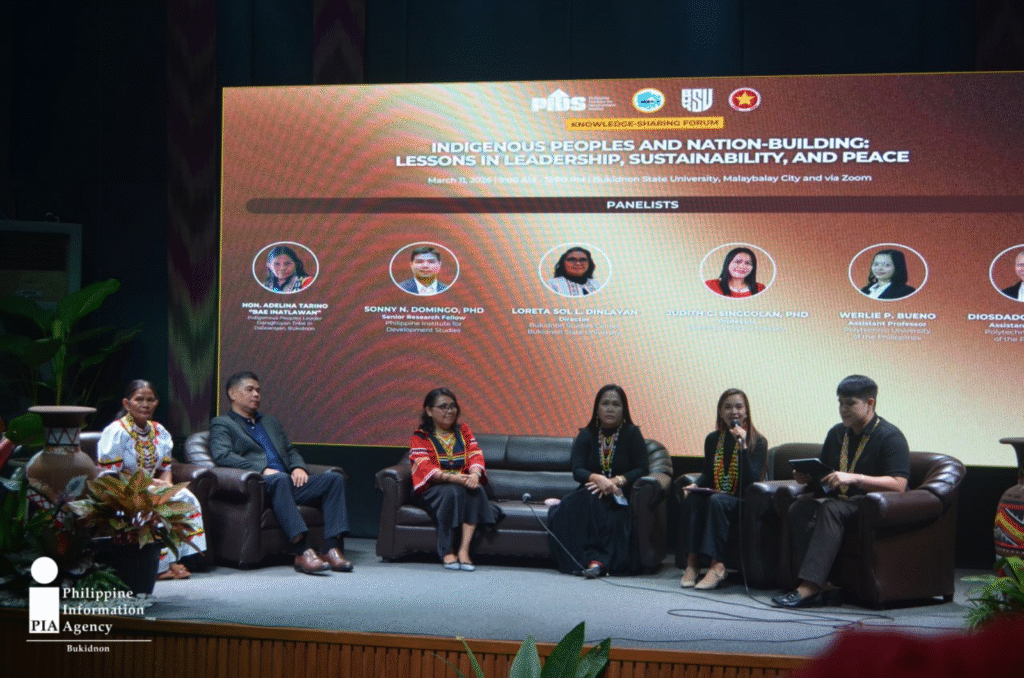
Panelists from the Philippine Institute for Development Studies (PIDS), Bukidnon State University, and the Polytechnic University of the Philippines discuss the integration of Indigenous expertise into national policy during the 12th Knowledge Sharing Forum in Malaybalay City. The event highlighted the SERP-P platform’s role in linking traditional resource management with evidence-based governance to drive inclusive regional progress. (Photo: AFFR/PIA-10/Bukidnon)