

MALAYBALAY CITY, Bukidnon — Every year, Kaamulan transforms Malaybalay—Bukidnon’s capital—into a vibrant stage of color, rhythm, and tradition
This 2026, the month-long Kaamulan Festival intensifies the challenge as nine local government units (LGUs) compete in street dancing, float, and ground presentation, drawing crowds eager to see former champions reclaim or defend their titles.
Malaybalay and Valencia cities will face off against the municipalities of Maramag, Talakag, Malitbog, Don Carlos, San Fernando, Manolo Fortich, and Kalilangan, showcasing skill, creativity, and cultural pride.
Provincial Tourism Administrative Officer Goldie Buhawi said months of preparation aim to realize a world-class festival.
“Many contingents have already proven themselves. It’s a tough competition,” she said, noting the growing expertise of participants.
To help level the playing field, the province allocated ₱1.3 million to each of the seven municipal contingents. Malaybalay and Valencia were excluded due to stronger revenue bases.
Organizers also nearly doubled the prize incentives, offering ₱300,000 for street dancing champions, ₱200,000 for float winners, and ₱150,000 for top performers in the ground presentation.
But competition is only part of the story.
Behind the scenes, approximately 400 concessionaires, including food vendors, artisans, and exhibitors, will undergo training in the Filipino Brand of Service Excellence (FBSE) program offered by the Department of Tourism. Organizers say the move aims to ensure that visitors experience not just spectacle, but quality hospitality.
Officials believe improved service standards will strengthen Kaamulan’s bid to attract more local and foreign tourists and sustain its reputation as one of Mindanao’s premier cultural festivals.
Grounded in tradition, “Kaamulan” comes from the Binukid word amul, meaning “to gather.” Historically, it referred to gatherings for datuship rites, rituals, weddings, harvest thanksgiving, and peace pacts—occasions that brought tribes together for a shared purpose.
Today, the festival continues to honor the customs and traditions of Bukidnon’s seven indigenous groups: Talaandig, Higaonon, Umayamnon, Manobo, Tigwahanon, Matigsalug, and Bukidnon.
Festivities opened on February 16 with Panandig Ha Pamuhat, a ritual that marks the start of the celebration and the setting up of indigenous booths. The calendar also features performances by national artists and a garden show running from March 1 to April 30, culminating in the grand competitions on April 18.
As drums echo across Malaybalay and contingents prepare their most elaborate performances yet, Kaamulan 2026 promises not only a clash of champions but a gathering that stays true to its traditions while raising standards for generations. (BGE/PIA 10-Bukidnon)
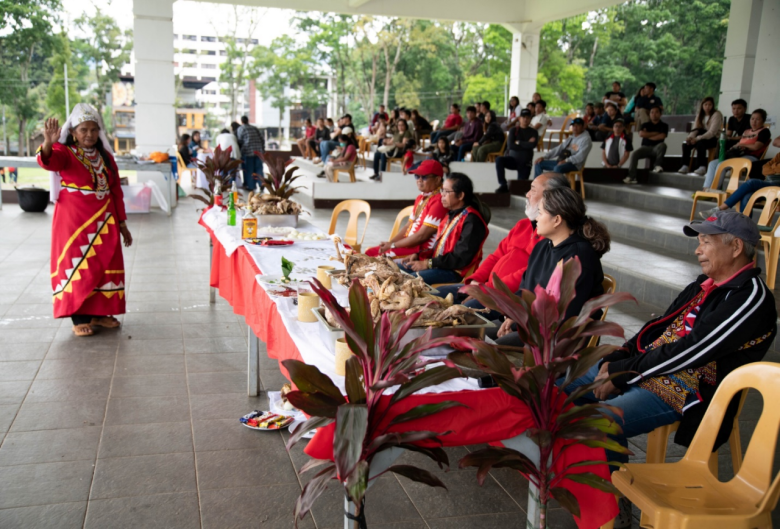
Kaamulan Festival opens. Bae Inatlawan Adelina Tarino, tribal chieftain and spiritual leader of Bukidnon-Daraghuyan community leads the “Panandig Ha Pamuhat” ritual at the provincial capitol grounds in Malaybalay City on February 16, marking the opening of Kaamulan Festival 2026. (Photo courtesy of Bukidnon LGU)